
FORA – Friends of Rescued Animals in South Africa
Linda Scrace is quite a character. Her Ballerina figure with a height of 1,69 m and weight of 55 kg is in contrast to her straight forward, powerful mind and strong voice. Having been raised close to nature in a hardworking South African family Linda found herself to be connected to animals of all kinds at an early stage in her life.
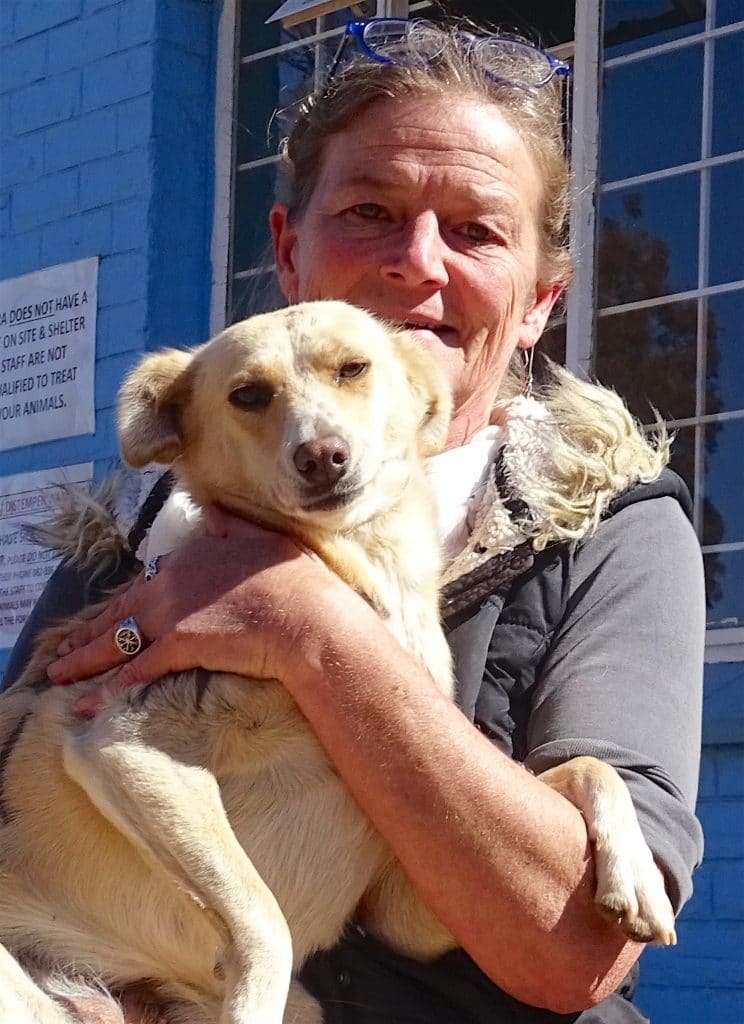
For many years she worked on a Friesian horse breeding farm until an accident turned her life upside down. She suffered multiple fractures to her neck and a fracture to her lumbar spine. Always used to cope with the hard physical work at the farm she was now facing a life in a wheelchair. After multiple operations that left 2 prosthetic discs in her lumbar spine and another 4 plus a plate in her neck she made her way back into a life without needing any assistance.
Today she still suffers from pain as some ligaments under her jaw were torn off and cannot be surgically repaired.

For some years during her recovery, she did not work with animals anymore as she could not continue her job at the farm. Slowly but surely she felt that the animals needed to find a way back into her life and this was the time when FORA (Friends of Rescued Animals) offered a job as the Manager of the Animal Shelter located in Krugersdorp.
What are today’s challenges?
Since that time, FORA shelter has developed heavily. Today the shelter is home to more than 400 happy dogs and 120 happy cats. “If we would open up and take every animal we could easily double number within a week”, says Linda. But the shelter is already operating at the limits of its capacity.

The times in South Africa are becoming even more difficult recently. The crime rate is increasing and the economic situation is weakening. That means that on the one hand people migrate to other countries leaving their animals behind and on the other hand some can just not afford their pets anymore. Furthermore, SPCA shelters are closing down and donors, as well as donations, are hard to find.
FORA is providing excellent care to the animals that found their temporary home with them. They have a variety of different kennel sizes and also smaller and bigger packs that live in different sized enclosures. They all are daily out for running and playtime in a big enclosure.
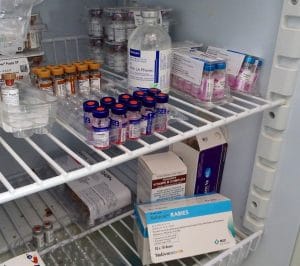
An important part of their work is vaccinating, spaying and neutering cats and dogs. Diseases such as Rabies and Distemper are on the rise in South Africa. Deworming especially for the puppies is mandatory and ticks, as well as flees, are an ongoing problem here too. The cost for all the pharmaceuticals is a big share of the total cost that FORA has to bare every month. On top of that, they also have to use a lot of quick tests to check new arrivals for any serious diseases before they are allowed to be put into the quarantine station. This is where all new arrivals will start their journey with FORA.
How can FORA be supported?
FORA is a non-profit organization and they are capable of issuing a tax refundable donation receipt. However, there are many other ways of supporting FORA and its cause.
First and most importantly of all you can support every shelter by stopping the increase of stray animals out there. This can be done by:
- spay and neuter your animals
- vaccinate and deworm your pets on a regular basis
- avoid buying a pet, instead, visit your local shelter and adopt
- if you move or migrate do not leave your animals behind. If you have to, find them a new home beforehand
Secondly, you can donate, give and provide what you are capable of. In FORAs case you can even start with donating your old newspapers so they can use it to cover the floor in the quarantine station kennels. The best way is to get in contact with your local shelter and ask them for their needs. In most cases, they have a wishlist even posted on their webpage which lets you know what they are in desperate need of. But still, the best way is just to call or stop by and ask.
You will find FORA on
Facebook https://www.facebook.com/groups/friendsofrescuedanimals/
FORA is working closely with CLAW (Community Lead Animal Welfare) a welfare animal clinic which is situated in an even more difficult area than FORA in Krugersdorp. The clinic welcomes its patients in Durban Deep a former mining ground at the outskirts of Soweto.
CLAW will be part of one of our next posts.